Mostrando entradas con la etiqueta History. Mostrar todas las entradas

10 Richest Criminals of All Time

Category: , ,

Anyone who says crime doesn’t pay should take a look at these men and women. This collection of bank robbers, drug dealers, crime lords and general scumbags shows that if you want to get ahead, sometimes it helps to chop off a few heads… (Note: white collar criminals like Bernard Madoff weren’t considered for this list; our focus was criminals of a more hardcore caste.)

10. Joseph Kennedy ($200-400 million, a billionaire figuring in today’s inflation)
 
Joseph Kennedy was the harmless-looking patriarch of one of the most powerful families in America, a corporate big shot… and strongly connected to the bootleggers who made millions selling alcohol during the Prohibition Era — if not a bootlegger himself. He is widely thought to have had dealings with Frank Costello, the head of the Luciano crime family, to facilitate smuggling alcohol into the country for easy distribution during the post-WWI period. Not only did Kennedy make a profit on his river of illicit booze, but he was also credibly accused of framing one of his rivals for rape in order to acquire his business (not to mention of being a gross anti-Semite and a major supporter of Hitler). Still, with his fortune measuring in the billions in today’s money (in 1957 he was named one of America’s richest people by Fortune magazine) it probably wouldn’t have been wise for the rest of the Kennedys to have disowned him completely…

9. Meyer Lansky ($300-400 million)

 
The suave, well-dressed “Mob’s Accountant,” Meyer Lansky had a formidable illegal gambling empire in America from the 1930s onwards, with branches stretching from Florida to Las Vegas. Much of the rest of his fortune was generated through his ultra-close links with the Mafia, particularly Benjamin “Bugsy” Siegel. He was such a compelling criminal that several movie gangsters were allegedly based on him, including Michael Corleone in The Godfather series and Max Bercovicz from the epic Once Upon a Time in America. Even after his retirement, Lansky still made Forbes’ list of the 400 richest people in America, and at the time of his death in 1983, the FBI reckoned he had hundreds of millions in concealed back accounts.  Now that’s good investing…

8. Griselda Blanco, “The Godmother” ($500 million)
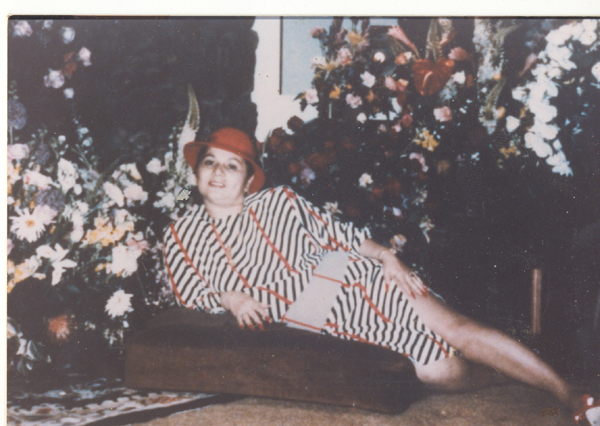
The Miami-based “Godmother,” Griselda Blanco was arguably the most ruthless gangster working in the drug trade in the ’70s and ’80s. She was known equally for her good business sense as she was for her sociopathic tendencies (at the age of 11 she took a fellow child hostage, demanded a ransom and eventually killed him with a bullet to the head). Nothing like learning your job skills early in life… Blanco was also suspected of murdering her three husbands, ordering more than 200 hits during her time as a mob boss, and forcing men to have sex with her at gunpoint. She went into hiding in the mid-2000s and was last seen in 2007. If she is still alive, she is believed to be one of the wealthiest self-made women on the planet… If the glass ceiling was going to crack, why did it have to be here?

7. Anthony Salerno ($600 million)
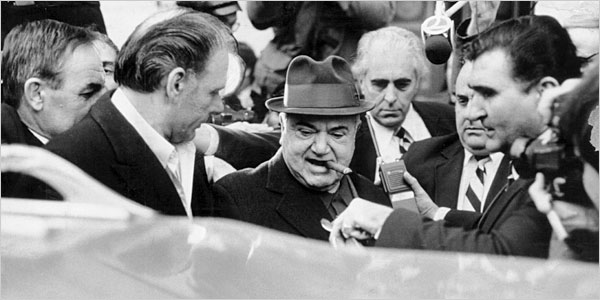
The real life “Fat Tony” wasn’t nearly as cuddly as his Simpsons counterpart. Easily distinguishable by his trademark cigar and fedora, Anthony Salerno worked his way up to Consigliere of the Genovese family in the 1970s, having spent the previous few decades practicing his skills in illegal gambling, loan sharking and protection rackets. In the ’60s, his New York numbers empire was generating $50 million annually. Salerno was also notable for sending his close personal friends Christmas cards with pictures of himself in pyjamas on the front. Come to think of it, that is pretty cuddly… Nevertheless, he died at the age of 80, having spent the fading years of his life in jail.

6. Joaquín Loera ($1 billion)

Mexican criminal Joaquín Loera is a dark horse compared to more flamboyant drug dealers like Pablo Escobar, but that doesn’t make him any less influential. On the contrary. Loera, who made most of his billion dollars selling drugs from Mexico — and goes by a number of nicknames, including El Chapo and Crystal King — is currently a fugitive in his own country but is believed to be the most powerful drug dealer on Earth — meaning that the reported figure for his wealth could be a big under-estimate (he might be worth closer to $5 billion). The man who was listed as the the 937th richest man in the world by Forbes in 2010 was last heard from leaving a taunting message for the police near the bullet-riddled corpses of two military officers: “You’ll never get ‘El Chapo’, not the priests, not the government.” Well, he’s gotten away with it so far.

5. Al Capone (nearly $1.3 billion per year in income, allowing for inflation)
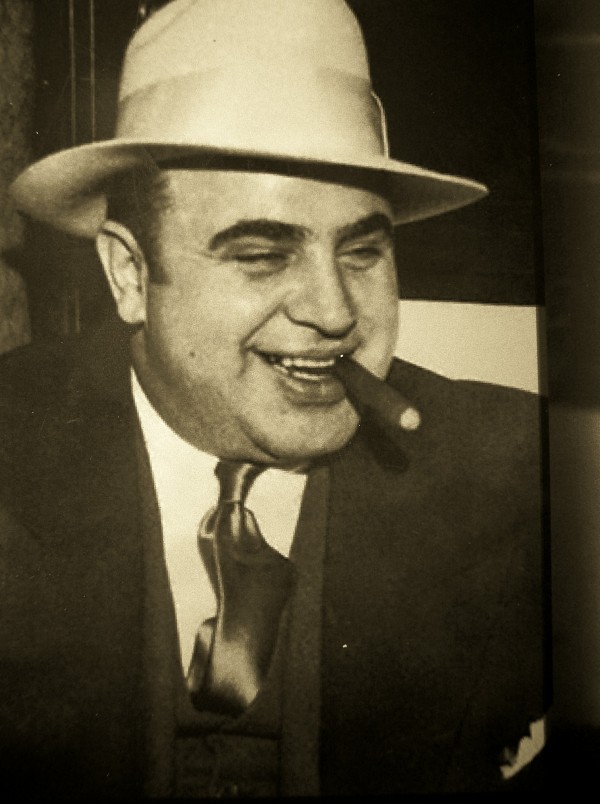
Iconic gangster Al Capone was practically the Bill Gates of the criminal world in his heyday. Capone supplied America with a river of bootleged alcohol in the 1920s and 1930s, and was frankly the real “untouchable” in Chicago. His iron-fisted (although certainly not iron-chinned!) rule over his city netted him a substantial income. Although there are no exact figures, it is estimated that in 1929 his criminal activities brought in more than $100,000,000 per year, over a billion dollars in today’s money. The cigar-chomping one even found the time to be a noted philanthropist and public figure… All that before he was brought down on tax evasion charges and syphilis. What a way to go for Chicago’s Godfather.

4. Susumu Ishii ($1.5 billion)

Scary tattooed Yakuza Godfather Susumu Ishii was a member of a manned suicide torpedo unit during World War II. However, after making it through the war alive, he fought his way into a new position as a gangster (sadly, one of the only jobs with long-term prospects as bad as his previous one) and worked his way up the career ladder in the Inagawa-kai gang. He made his estimated billion-and-a-half dollars primarily through loans, banking deals and real estate scams, but lost most of it when Japan’s bubble economy burst at the end of the 1980s. The gangster was so popular that when he died in 1991, his funeral was attended by over 5,000 people. How many bosses, mob or not, can say that?

3. Carlos Enrique Lehder Rivas ($2.7 billion)
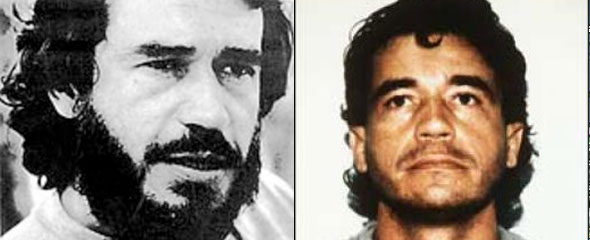
Carlos Lehder was one of the co-founders of the infamous Medellín cartel, the group of South America-based drug barons who at their peak were responsible for shipping $60 million of illegal substances per day (and another of whose leaders, José Gonzalo Rodríguez Gacha, made Forbes‘ annual list of billionaires, in 1988). Described as a megalomaniac, this criminal spared no expense on the transportation of his precious cocaine, even buying a private plane and a Bahamian island to help him smuggle the substance into the US. How many legitimate businessmen could afford that? After amassing a fortune that would make ‘Scarface’ blush, he was eventually imprisoned in the 1980s and is still in jail in the US to this day. Hmm, on second thought, maybe crime doesn’t pay after all…

2. Pablo Escobar ($9-25 billion)
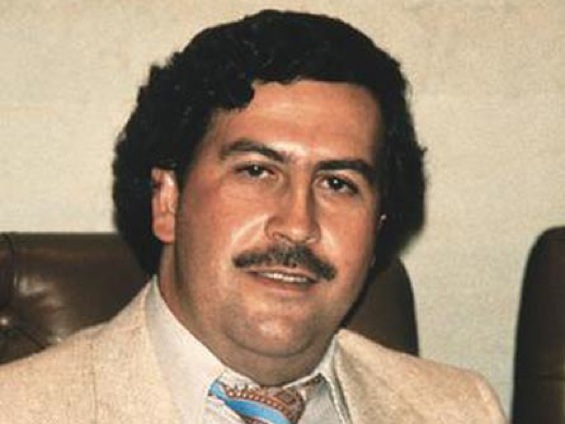
From being born in a village in Columbia with no electricity, Pablo Escobar worked his way up to become one of the wealthiest and most powerful men in the world. Now that’s a self-made man. At the peak of their operations, he and his associates in the Medellín cartel smuggled around 15 tons of cocaine every day, and protected their shipments by offering snooping officials “lead or silver” — lead for bullets or silver for a bribe. In 1989, Forbes magazine estimated that he was the world’s seventh richest man, with assets of close to $25 billion, and control of 80 percent of the global cocaine market. Despite being a ruthless, murderous drug lord, Escobar was also a compassionate family man (he once reportedly burned $1 million in cash to keep his daughter warm while on the run) but that doesn’t make his illegal exploits any less ominous.

1. Amado Carrillo Fuentes (around $25 billion)
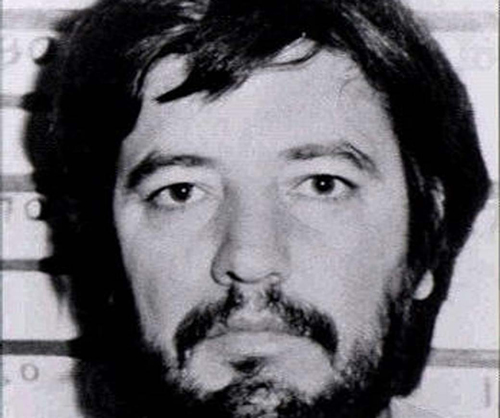
Hans Gruber lookalike and cocaine baron Amado Fuentes was practically a real life James Bond villain. He had the whole package: a vast, drug-based Mexican empire; incredible hardware (including a fleet of 727 jets to transport his product); he even had plastic surgery to alter his appearance. And he was rich. At the time of his death from medical complications, his net worth was estimated to be around $25 billion, which would make him the richest criminal of all time on record. That may be quite an accomplishment, but it’s not exactly a career that is going to earn you much respect… except amongst other drug barons, of course.

9 Crazy Things People Found Inside Their Walls

Category: ,

The Ballad of the Walled-Up Wife chronicles the story of hapless masons who are incapable of building a wall that will last. After years of failure, they learn that in order to make their work last, they must offer up a sacrifice. Once, as their master’s wife passed by, they grabbed her and entombed her in the wall they were building. According to some versions of the ballad, the wall still stands.


While immuring wives in walls is strictly outlawed (and largely fictional), the practice of hiding things behind sheetrock or brick is pervasive. From the illegal to the superstitious to the just plain insane, here are 9 crazy things found stashed inside walls.

1. Babies

In 1850, a mummified baby tumbled out from between the walls of a Parisian apartment. The couple living in the apartment were charged with murder; they were later cleared when a physician used insects to determine the time of death. This case marked the first time in French forensic science that entomology was used in a criminal trial. And 28 years later, French pathologist Edmond Perrier Megnin used insects to calculate the time of death of a mummified infant in a similar case.

Mummified infants have been found in walls as recently as 2007, when contractor Bob Kinghorn discovered the body of a child wrapped in newspaper in the walls of a home in East Toronto. Police investigated the infant’s death, but were unable to determine the cause.

2. Urine and Fingernail Clippings


Filled with urine, hair, nail clippings or red thread, Witch Bottles were hidden in walls and buried in the thresholds of homes to counteract a witch’s curse. One was found in Greenwich in 2009 that dates back to the 17th century. Researchers were even able to analyze urine found in the bottle, which contained traces of nicotine.

The bottle also contained a piece of leather cut into the shape of a heart and pierced with a leather nail. Scientists are unsure of the symbolism, but in similar finds the bottles have contained heart-shaped cloth pierced by brass pins.

A court record from 1682 documents that a husband who believes his wife to be a witch should boil in a pipkin a quart of her urine, fingernail clippings and hair.

3. Live Children

Two years after he disappeared with his mother, 6-year-old Richard Chekevdia was discovered hidden in the walls of his grandmother’s home in Illinois.

Ricky disappeared in 2007 after a contentious custody dispute between his mother, Shannon Wilfong, and his father, Michael Chekevdia. His grandmother, Diane Dobbs, insists that the boy lived most of his life outside the walls of the home, only hiding when necessary. However, police reports state the boy had rarely been allowed outside. And a judge found that the boy had been denied access to medical care, education and contact with his peers. The police found the boy and his mother crouched in a hiding place behind a bedroom dresser.

4. Cash

In Ohio, contractor Bob Kitts found $182,000 in Depression-era money inside the walls of a bathroom he was renovating. The contractor called the homeowner, Amanda Reece, who offered him 10 percent of the find. He demanded 40 percent and the situation devolved from there.

When the Cleveland Plain Dealer reported on the case, descendants of the home’s original owner, Patrick Dunne — a wealthy businessman who hid the money during the Great Depression — also filed claim to the money. After the costly court proceedings, all of the people laying claim to the money received only a fraction of the find.

5. Priceless Artwork

 
In 1502, Italian statesman Piero Soderini commissioned Leonardo da Vinci to paint a scene from the famous Battle of Anghiari. The painting is thought to be 20 feet long and 10 feet high. In the 1550s, Giorgio Vasari was commissioned to paint over the mural, but the painter reportedly couldn’t bring himself to destroy it.

Maurizio Seracini, an art diagnostician at the University of California, San Diego, has been looking for the lost Leonardo da Vinci work for 36 years. Seracini is convinced that Vasari hid it in the wall — and he might be onto something.

His first big break came in 1970, when he discovered the words “cerca trova” painted on a flag on Vasari’s mural. Seracini believes that the phrase, which means “seek and you will find,” indicates that Vasari built a false wall over the painting in order to preserve the mural. Recent technology has enabled researchers to take pictures of the hollow between Vasari’s mural and the wall, where they discovered black pigment believed to be similar to the pigment used in other Leonardo da Vinci paintings. Unfortunately, bureaucracy and political protest have stymied the investigation.

6. Ill-Gotten Gains


In the walls of his home in Oak Brook, Illinois, mobster Frank Calabrese hid jewelry, fire arms and, of course, cash money. Lots of it.

During Calabrese’s 2007 trial, authorities learned that the long-time hit man liked to stash money and weapons into the nooks and crannies in his homes. After the trial, federal agents procured a search warrant and discovered Calabrese’s stash of loot and taped recordings with other mobsters behind the basement’s wood-paneled
walls. Calabrese’s lawyer told the Chicago Tribune that he was “concerned” that these items hadn’t been discovered in previous searches of the home.
 

7. Shoes

A collection of 300-year-old shoes was found in the wall of the Gothic Liedberg Palace in Korschenbroich, Germany. In Lubenham, England, a pair of shoes was built into the wall of Papillion Hall in order to rid a family of decades of misfortune brought on by a curse. And in cottages and churches across Europe and the United States, hundreds of shoes have been found tucked inside the walls. The practice is so common that the Northhampton Borough Council collects recorded instances of concealed footwear. If you find any, let them know.

Some scholars theorize that the practice of immuring shoes is done for good luck and to ward off evil spirits from entering a home.

8. Cats

The practice of hiding cats in walls was an ancient ritual to ward off evil spirits. All over the UK, mummified cats are frequently toppling out from between the walls of 17th and 18th century buildings. One of the most famous instances was in Pendle, Lancashire, when a mummified cat was discovered in the wall of an ancient cottage. The cottage is presumed to be the location at which one of England’s most famous witch covens met. In 1612, 11 men and one woman from the coven were accused of witchcraft and hanged.

9. Unmentionables

The only thing worse than discovering dirty underwear hidden in your home is discovering centuries-old dirty underwear in your walls. Across Western Europe, unsuspecting home owners often find caches of garments (under and over) inside the walls of their homes. In fact, the finds are so common that they are not often reported.

Evidence indicates that the practice of hiding your knickers in the walls dates back to the Middle Ages. The clothes hidden are often worn and contain hidden objects like documents and coins. According to the website for the Deliberately Concealed Garments Project:


“The tradition of concealing clothes can be related to the practice of concealing other objects such as dried cats, witch bottles and charms in buildings. These types of objects have been discovered hidden in similar places. The concealing of these items including garments can be related to folklore and superstitious traditions relating to the ritual protection of a household and its inhabitants.”


The Eiffel Tower

Category: , ,

The Eiffel Tower (French: La Tour Eiffel, nickname La dame de fer, the iron lady) is a puddled iron lattice tower located on the Champ de Mars in Paris, named after the engineer Gustave Eiffel, whose company designed and built the tower. Erected in 1889 as the entrance arch to the 1889 World's Fair, it has become both a global cultural icon of France and one of the most recognizable structures in the world. The tower is the tallest structure in Paris and the most-visited paid monument in the world; 7.1 million people ascended it in 2011. The third level observatory's upper platform is at 279.11 m the highest accessible to public in the European Union and the highest in Europe as long as the platform of the Ostankino Tower, at 360 m, remains closed as a result of the fire of August 2000. The tower received its 250 millionth visitor in 2010.

First drawing of the Eiffel Tower by Maurice Koechlin 

The tower stands 320 metres (1,050 ft) tall, about the same height as an 81-story building. During its construction, the Eiffel Tower surpassed the Washington Monument to assume the title of the tallest man-made structure in the world, a title it held for 41 years, until the Chrysler Building in New York City was built in 1930. However, because of the addition, in 1957, of the antenna atop the Eiffel Tower, it is now taller than the Chrysler Building. Not including broadcast antennas, it is the second-tallest structure in France, after the Millau Viaduct.

The tower has three levels for visitors. Tickets can be purchased to ascend, by stairs or lift (elevator), to the first and second levels. The walk from ground level to the first level is over 300 steps, as is the walk from the first to the second level. The third and highest level is accessible only by lift - stairs exist but they are not usually open for public use. Both the first and second levels feature restaurants.

The tower has become the most prominent symbol of both Paris and France, often in the establishing shot of films set in the city.
 

Construction

Foundations of the Eiffel Tower

Eiffel Tower under construction between 1887 and 1889


Work on the foundations started in January 1887. Those for the east and south legs were straightforward, each leg resting on four 2 m (6.6 ft) concrete slabs, one for each of the principal girders of each leg but the other two, being closer to the river Seine were more complicated: each slab needed two piles installed by using compressed-air caissons 15 m (49 ft) long and 6 m (20 ft) in diameter driven to a depth of 22 m (72 ft) to support the concrete slabs, which were 6 m (20 ft) thick.


Each of these slabs supported a block built of limestone each with an inclined top to bear a supporting shoe for the ironwork. Each shoe was anchored into the stonework by a pair of bolts 10 cm (4 in) in diameter and 7.5 m (25 ft) long. The foundations were complete by 30 June and the erection of the ironwork began. The very visible work on-site was complemented by the enormous amount of exacting preparatory work that was entailed: the drawing office produced 1,700 general drawings and 3,629 detailed drawings of the 18,038 different parts needed: The task of drawing the components was complicated by the complex angles involved in the design and the degree of precision required: the position of rivet holes was specified to within 0.1 mm (0.04 in) and angles worked out to one second of arc. 
The finished components, some already riveted together into sub-assemblies, arrived on horse-drawn carts from the factory in the nearby Parisian suburb of Levallois-Perret and were first bolted together, the bolts being replaced by rivets as construction progressed. No drilling or shaping was done on site: if any part did not fit it was sent back to the factory for alteration. In all there were 18,038 pieces of puddle iron using two and a half million rivets.


At first the legs were constructed as cantilevers but about halfway to the first level construction was paused in order to construct a substantial timber scaffold. This caused a renewal of the concerns about the structural soundness of the project, and sensational headlines such as "Eiffel Suicide!" and "Gustave Eiffel has gone mad: he has been confined in an Asylum" appeared in the popular press.  At this stage a small "creeper" crane was installed in each leg, designed to move up the tower as construction progressed and making use of the guides for the lifts which were to be fitted in each leg. The critical stage of joining the four legs at the first level was complete by March 1888. Although the metalwork had been prepared with the utmost precision, provision had been made to carry out small adjustments in order to precisely align the legs: hydraulic jacks were fitted to the shoes at the base of each leg, each capable of exerting a force of 800 tonnes, and in addition the legs had been intentionally constructed at a slightly steeper angle than necessary, being supported by sandboxes on the scaffold.

No more than three hundred workers were employed on site, and because Eiffel took safety precautions, including the use of movable stagings, guard-rails and screens, only one man died during construction.
The 1889 Exposition Universelle for which the Eiffel Tower was built

Inauguration and the 1889 Exposition

 
The main structural work was completed at the end of March 1889 and on the 31st Eiffel celebrated this by leading a group of government officials, accompanied by representatives of the press, to the top of the tower. Since the lifts were not yet in operation, the ascent was made by foot, and took over an hour, Eiffel frequently stopping to make explanations of various features. Most of the party chose to stop at the lower levels, but a few, including Nouguier, Compagnon, the President of the City Council and reporters from Le Figaro and Le Monde Illustré completed the climb. At 2.35 Eiffel hoisted a large tricolore, to the accompaniment of a 25-gun salute fired from the lower level. There was still work to be done, particularly on the lifts and the fitting out of the facilities for visitors, and the tower was not opened to the public until nine days after the opening of the Exposition on 6 May, and even then the lifts had not been completed.

The tower was an immediate success with the public, and lengthy queues formed to make the ascent. Tickets cost 2 francs for the first level, 3 for the second and 5 for the top, with half-price admission on Sundays, and by the end of the exhibition there had been nearly two million visitors.

Eiffel had a permit for the tower to stand for 20 years; it was to be dismantled in 1909, when its ownership would revert to the City of Paris. The City had planned to tear it down (part of the original contest rules for designing a tower was that it could be easily demolished) but as the tower proved valuable for communication purposes, it was allowed to remain after the expiry of the permit. In the opening weeks of the First World War the powerful radio transmitters using the tower were used to jam German communications, seriously hindering their advance on Paris and contributing to the Allied victory at the First Battle of the Marne.

The Temples of Humankind

Category: , ,

The great construction many have called
‘The Eighth Wonder of the World’

Every year thousands of people visit Damanhur to try out the social model, study the philosophy and to meditate in the Temples of Humankind, that great underground construction excavated by hand into the rock by the citizens of Damanhur and which many have called the ‘Eighth wonder of the world’.

The Water Hall, the Earth Hall, the Hall of Spheres, the Hall of Mirrors, the Metal Hall, the Blue Temple and the Labyrinth: The Temples of Humankind are an underground work of art, created entirely by hand and dedicated to the divine nature of humanity. It is a great three dimensional book which recounts the history of Humankind through all the art forms, a path of re-awakening to the Divine inside and outside of ourselves.

In the Temples of Humankind, every aspect has a meaning: the colours, the measurements and every detail follow a precise code of forms and proportions; every Hall has its specific resonance and its own sound.
 
 
The Temples of Humankind symbolically represent the inner rooms inside every human being. Walking through its halls and corridors corresponds to a profound journey inside oneself. The Temples wind for over 8,500 cubic metres on five different levels, connected to one another by hundreds of metres of corridors. They arise in the place where the Eurasian continental plate meets the African plate, pushing up a mineral 300 million years old: it is mylonite, a rock that carries the physical energy of the earth. The Temples of Humankind have been built right inside a vein of this particular mineral, whose presence follows perfectly the flowing of the ‘Synchronic Lines’ of the planet. The synchronic lines are like great rivers of energy which cross the Earth and connect it to the Universe, carrying ideas, thoughts and dreams. The Temples arise within a ‘shining knot’ a point where four synchronic lines meet.

The Temples are a great laboratory where art and science, technology and spirituality are united in the research of new roads for the evolution of humanity. As during the Renaissance, the construction of the Temples of Humankind has been the influence behind the creation of artistic and craft workshops, thanks to which Damanhur is valued all over the world.

Keeping pace with the growth of the Temples of Humankind – which represent the highest collective, artistic expression – Damanhurian society has refined itself and has created the basis for its own culture and tradition.

The Temples of Humankind are a surprising achievement, and what does that say about the community that built them? The social structure developed by the Damanhurians has turned out to be as extraordinary in every aspect as the Temples are. The first thing to clarify is that this is a place of spiritual and philosophical research; Damanhur is not trying to create a new religion. Here they are researching in the field of spirituality, of social philosophy, here they are researching life. (…)

If all this sounds a bit too good to be true, just let me say that after being with many of these people, living with them, experiencing people’s daily, there is no doubt in my mind that the reality comes close to the vision.”


JEFF MERRIFIELD

Extract from:“The story of the Extraordinary Italian Artistic and Spiritual Community”

Hanford Mead, 2006

History of Religion

Category: ,

 How has the geography of religion evolved over the centuries, and where has it sparked wars? Our map gives us a brief history of the world's most well-known religions: Christianity, Islam, Hinduism, Buddhism, and Judaism. Selected periods of inter-religious bloodshed are also highlighted. Want to see 5,000 years of religion in 90 seconds? Ready, Set, Go!


Source...

The World’s Oldest Bed Is 77,000 Years Old

Category:


Archaeologists have found the world's oldest bed in South Africa and it's 50,000 years older than any bedding ever found. The 77,000-year-old bedding, which was made with medicinal plants, shows how creative our ancestors could be.

Imagine the thought process of an ancient human. Sleeping on the ground for years probably made for a straight back but didn't do well for a comfortable sleep (or other bedroom activities). Who was the genius who laid a bunch of leaves to give him a wee more comfort. Did he or she get made fun of? Or were they lauded as genius. So many questions!

The archaeologists discovered a stack of these ancient beds that consisted of "compacted stems and leaves of sedges, rushes and grasses stacked in at least 15 layers within a chunk of sediment 10 feet thick." Basically, the bedding was made from leaves. More comfortable than the ground, right? Most of the plant remains used in ancient bedding were that of Cryptocarya, a plant species that also holds medicinal purposes and keeps mosquitos away. The discovery of using such a plant goes to show that not only were early humans savvy and resourceful, they loved a good's night rest just as much as we do.


When and Where Did English Begin?

Category: , ,

The quick answer
 
A brief but accurate answer to this would be “very roughly 1500 years ago, give or take a century or so, on the Eastern side of the island of Great Britain — in what we now call the East and South-East of England (but nobody called it ‘England’ then)”.

Perhaps this is too vague for you — you would like a date? As a respectable academic, I ought to say this is as precise as we can be. But if you press me — all right, then: in a symbolic sense, at any rate, perhaps we might say that English began in A.D. 449, at a place called Ebbsfleet on Pegwell Bay, near Ramsgate in Kent. I cannot give you a specific birthday, but it will have been in the summer rather than winter half of the year.

The Evolution of Google Search in Six Minutes [VIDEO]

Category: ,


Google has come a long way since it started as a research project in 1996, and it may only be just getting started. The company posted a video and timeline that highlight the evolution of Google and hint at what to expect from the search engine giant in the future.

The video, called “The Evolution of Search in Six Minutes,” is a follow-up clip from one that Google posted earlier this year that shared the methodology behind search ranking and evaluation.

“Our goal is to get you to the answer you’re looking for faster and faster, creating a nearly seamless connection between your questions and the information you seek,” said Ben Gomes, Google Fellow via a Google Blog post. “That means you don’t generally need to know about the latest search feature in order to take advantage of it— simply type into the box as usual and find the answers you’re looking for.”

But it wasn’t always so simple. From making the web easy to navigate through an overwhelming amount of content to getting ads up on the site, the video touches on how Google morphed into what it is today.

On September 11, 2001, Google users were searching for “New York Twin Towers,” but the results had nothing relevant to the tragic events of the day, according to Google Fellow Amit Singhal: “Our index was crawled a month earlier and of course there was no news in that index,” Singhal said in the video. “We placed links to all of the news organizations such as CNN right on our front page, saying please visit those sites to get the news of the day because our search is failing you.”

Google knew that if it could crawl news quickly and provide multiple viewpoints about the same story to users, the results could be dynamic. That was the birth of Google News.

The timeline also highlights the implementation of Universal Search, which returns results such as images, videos and news, in addition to basic web pages. The company later introduced Quick Answers at the top of the page for a wide variety of topics, including flight times, sports scores and weather.

Google said it remains focused on developing faster ways to search and save time, whether its shaving seconds off searches with Google Instant or helping users search from their phones with Voice Search.

“Our users need much more complex answers,” Singhal said. “My dream has always been to build the Star Trek computer. I would be able to walk up to a computer and say, ‘Hey, what is the best time for me to sow seeds in India given that monsoon was early this year?’ People will be looking for answers to more complex questions.’”

Although the company didn’t shed too much light on the future of search, there’s a good chance it could look very different moving forward.

“If the past is any indication, we don’t know what search will look like in 2020, but we wouldn’t be surprised if it looks nothing like it does today,” Gomes said.


(C) All Rights Reserved. El hongo escribe | Free blogger templates Designed by SkinPress.com

Looking for...